
Labrador Retriever Guide: Temperament, Care, Cost & Lifespan
Published on: October 7, 2026

Written By
Ella Freya

Reviewed By
Jason Roy

A Labrador retriever is one of the friendliest, most trainable family dogs you can bring home, and for active households the answer to “is a Lab right for us?” is usually yes. The catch is a big appetite, serious energy, and a puppy stage that tests your patience until about age three. Here’s what life with a Lab really looks like, from the first puppy zoomies to the gray-muzzle years. Whether you’re a first-time owner or adding a second dog, you’ll know what to expect before you commit.
At-A-Glance Quick Facts
| Attribute | Rating / Metric |
|---|---|
| 📏 Size | Large |
| ⚖️ Weight | Males 65–80 lbs, females 55–70 lbs |
| 📅 Lifespan | About 12 years (median) |
| 🏃 Daily Exercise | 60–90+ minutes |
| ✂️ Grooming Need | Moderate (heavy seasonal shedding) |
| 🎓 Trainability | Very easy |
| 👨👩👧 Good With Kids | Excellent (supervise young pups) |
| 💵 Upfront Cost | Breeder $800–$2,500, adoption about $50–$600 |
| 🌱 Best For | Active families and dedicated first-time owners |
Labrador Retriever Overview: Origins and Appeal
The Labrador retriever traces back to the water dogs of Newfoundland, which worked beside fishermen hauling nets and retrieving lines from icy water. English sporting families refined those dogs into the retriever we know today. The Kennel Club in England recognized the breed in 1903, and the American Kennel Club registered its first Lab in 1917. That working past still shows in a Lab’s webbed paws, water-shedding double coat, and tireless love of fetch.
Size-wise, the AKC breed standard describes males at 65 to 80 pounds and females at 55 to 70 pounds, in black, yellow, or chocolate. Labs have long ranked among the most popular breeds in the United States because of their friendly outlook, easy trainability, and willingness to join every family plan, from weekend hikes to couch time.
Labrador Temperament: Are Labs Good Family Dogs?
Ask anyone who lives with one and they’ll describe the same dog: outgoing, eager to please, and happiest when the whole family is in the room. A Lab’s temperament is gentle and friendly toward people and other animals, and most are intensely food-motivated, which makes positive reinforcement training feel almost effortless. They also carry a “soft mouth” from their retrieving roots, so many Labs love carrying a toy, a slipper, or your hand, gently. Expect a true velcro companion who follows you from room to room.
So, are Labs good family dogs? Absolutely, with realistic expectations. Labs are patient and playful with kids, but a young Lab is a big, bouncy dog who can knock over a toddler without meaning to, so supervise early play. The adolescent months bring chewing, counter-surfing, and wild zoomies, and Labs stay puppyish until around age three. They do best with company and daily activity, because a Lab left alone for long stretches often turns bored energy into destroyed couch cushions. They’re friendly rather than protective, so don’t count on one as a watchdog.
English vs. American Labradors
Searching for a labrador américain? That’s simply the American Lab, usually bred from field and hunting lines. English (show-line) Labs tend to be stockier, with a broader head, thicker neck, and a calmer, steadier temperament. American (field-line) Labs are typically taller and leaner, with a faster, more intense drive.
Both are the same breed under the same standard, and the difference comes down to breeding focus, not separate registries. For most families, a show-line pup or a mellow field-line puppy suits everyday life. High-drive field lines suit hunters, dock-diving fans, and runners who want a nonstop partner. Ask any breeder about the energy of both parents, not just coat color.
Labrador Care Basics: Exercise, Feeding & Grooming
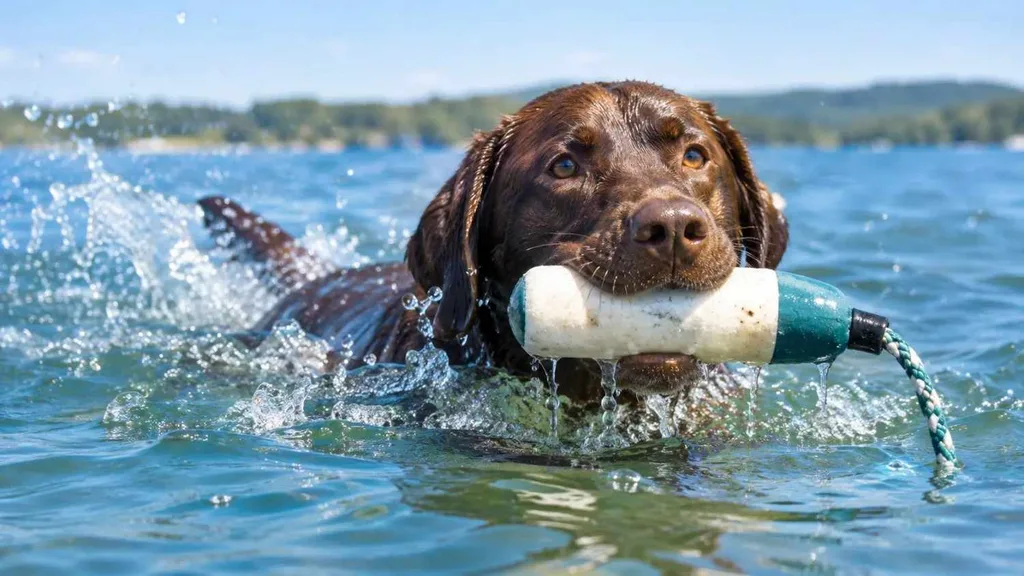
Exercise: Plan on 60 to 90 minutes of activity every day, split between walks, fetch, and swimming if you can. Mental work counts too, so rotate puzzle feeders, scent games, and short training sessions to tire out a clever mind. Skimp on exercise and a Lab will find its own entertainment, usually your shoes. Feeding: Labs will eat until they’re sick, so measure every meal and keep treats to a small share of the daily calories. In a famous feeding study, Labs kept lean lived nearly two years longer than their littermates, which makes a trim waistline the single most impactful habit you can build.
Grooming: The dense double coat sheds all year, with two heavy undercoat blowouts each spring and fall. Brush weekly, daily during blowouts, and bathe only when needed. Dry and check the ears after every swim, because floppy ears trap moisture and ear infections are among the most common Lab problems. Trim nails every few weeks and start tooth brushing early.
Average Age of a Labrador Retriever
The average age of a Labrador retriever is about 12 years. A large UK study of more than 33,000 Labs found a median lifespan of 12.0 years. The same research reported shorter lifespans in chocolate Labs, about 10.7 years compared with 12.1 for black and yellow dogs. That finding rests on a smaller number of deaths, so treat it as a pattern worth knowing about rather than a prediction for your dog.
Genetics sets the stage, but daily habits matter. Keeping your Lab lean, protecting growing joints with gentle puppy exercise, staying on top of dental and ear care, and keeping vet checkups on schedule give a Lab its best shot at the long end of that range. Musculoskeletal problems and cancer were the leading causes of death in that study, which is why healthy weight and joint care matter so much.
Common Labrador Health Problems
Labs are generally sturdy, but a few conditions show up again and again. In the same UK study, overweight and obesity, ear infections, and degenerative joint disease topped the list, and about 62 percent of dogs had at least one disorder recorded in a single year. Hip and elbow dysplasia, eye disease, and exercise-induced collapse (EIC) are the inherited issues responsible breeders screen for, which is why health clearances matter so much when choosing a puppy.
Labs are also a large, deep-chested breed, so every owner should know the signs of bloat, a stomach-twisting emergency that needs surgery. Feeding smaller meals, slowing fast eaters with a puzzle bowl, and skipping hard exercise right after eating are sensible habits. For the full emergency picture, read this bloat guidance from veterinary surgeons.
Emergency Red Flags: Go to the Vet Immediately
- Retching or trying to vomit with nothing coming up.
- A swollen, hard, or painful belly, with restlessness, pacing, or drooling.
- Pale gums, collapse, or sudden weakness in the back legs after hard exercise (a possible sign of EIC).
Labrador Cost: First-Year Budget
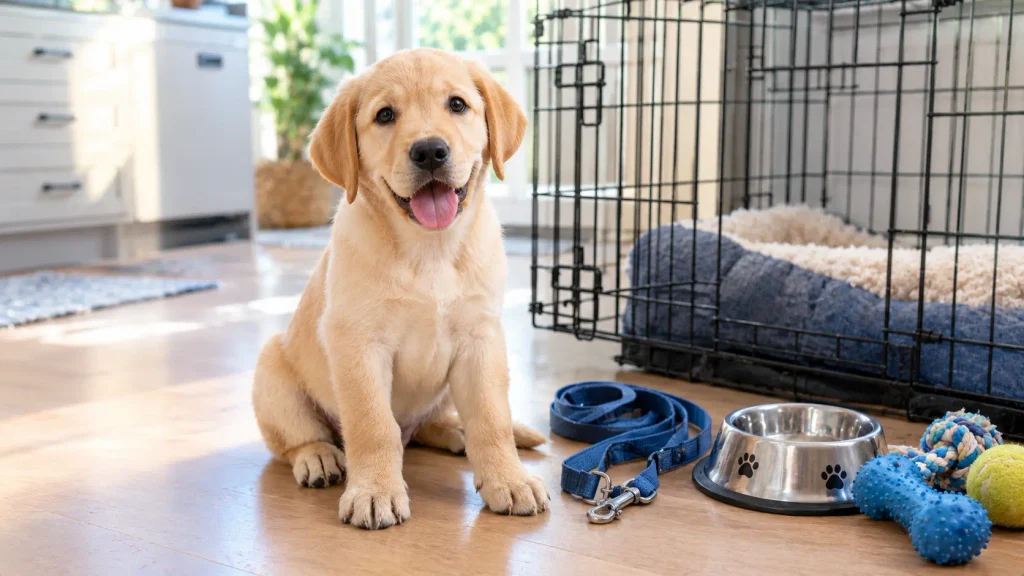
Most reputable breeders charge roughly $800 to $2,500 for a Lab puppy, with show or field-trial lines going higher, while adoption fees usually run about $50 to $600. A price far below that range, say $300 to $500, often points to an unplanned litter or a puppy mill. Health testing on both parents is expensive for breeders, and a fair price reflects it.
The upfront cost is only the start. Most Lab owners spend around $3,500 to $5,000 in the first year and roughly $1,500 to $3,000 a year after that, with food as the biggest recurring expense. Use these rounded estimates as a starting point and adjust for your area:
| First-Year Expense | Typical Range |
|---|---|
| Puppy purchase or adoption fee | $50–$2,500 |
| Vet care (vaccines, microchip, spay/neuter) | $500–$1,200 |
| Food (large-breed puppy to adult) | $400–$900 |
| Gear (crate, bed, leash, bowls, toys) | $300–$600 |
| Training classes | $200–$500 |
| Pet insurance or emergency fund | $400–$1,000 |
| Where most owners land | $3,500–$5,000 |
Choosing a Healthy Lab Puppy
A health-tested puppy is worth every penny. Reputable Lab breeders screen for the conditions above and happily share the results, so a good rule is no clearances, no puppy. Visit the home, meet the mother, and expect a written health guarantee. Adopting is a wonderful route too, since rescues often have adult Labs whose personalities are already on display.
Before you commit, ask the breeder for the following, and double-check results in the OFA health database:
- Hip and elbow evaluations for both parents.
- A current eye exam for both parents.
- An EIC DNA test result for both parents.
- A look at the litter’s living space, with puppies raised indoors around people.
- A written health guarantee and a take-back policy.
Final Thoughts for Prospective Lab Parents
A Lab repays daily walks, patient training, and measured meals with years of goofy, loyal companionship. Start with a health-tested puppy or a well-matched adult, build a simple routine, and keep that waistline trim. Before you bring one home, book a vet visit, find a positive-reinforcement trainer, and ask yourself honestly whether your household has the time and energy to match a Lab’s. If it does, you’re in for one of the most rewarding dogs you’ll ever share your home with.
Frequently Asked Questions
How long do Labradors live?
Labs live about 12 years on average, and many reach 13 or 14 with a lean body weight and good veterinary care. Chocolate Labs showed shorter lifespans in UK research, around 10.7 years. Keeping your dog trim is the most effective thing you can do.
Are Labs good with kids?
Yes. Labs are patient, playful, and sturdy, which suits most families. Their size and bounce mean young Labs can knock down toddlers, so supervise play and teach good manners early.
Do Labs shed a lot?
Yes. Labs shed year-round and blow their undercoat heavily in spring and fall. Weekly brushing, plus daily sessions during shedding season, keeps fur under control, and a good vacuum helps.
How much exercise does a Lab need?
Plan on 60 to 90 minutes daily, mixing walks, fetch, and swimming with training games or puzzle feeders. Puppies need shorter, gentler sessions while their joints develop.
How much does a Lab cost?
A puppy from a reputable breeder usually costs about $800 to $2,500, and adoption fees run roughly $50 to $600. Budget about $3,500 to $5,000 for the first year and $1,500 to $3,000 a year after that.
Ella Freya
Ella Freya is a passionate pet writer focused on helping pet parents create healthier, happier lives for their furry companions. Her work combines caring storytelling with practical pet advice that feels easy to understand and genuinely useful.
Ella creates content around pet wellness, behavior, nutrition, and everyday care, always with the goal of making life better for both pets and the people who love them. She believes the smallest moments with pets often become the most meaningful ones.